Thinking about buying a duplex or small multi-family in Rockford but not sure if the numbers will work for you? You’re not alone. When you’re weighing cash flow, taxes, financing, and day-to-day management, it helps to see real local data and a simple way to run the math. In this guide, you’ll learn what Rockford 2–4 unit buildings typically cost, what rents look like, how to size expenses, and how to estimate cap rate and cash flow with a clear step-by-step example. Let’s dive in.
Why Rockford small multifamily stands out
Rockford is known for affordability and steady rent demand. Median single-family prices sit in the low-to-mid $100k to $200k range, which keeps entry costs realistic. At the same time, average apartment rents land around the low $1,000s per unit. That combination can support cash-flow focused investing if you buy and manage well.
Investors also report going-in cap rates in the mid-to-high single digits. Smaller 2–4 unit buildings often trade at higher yields than large institutional properties, especially when you find a solid building at a fair price and keep expenses under control.
What 2–4 unit buildings cost
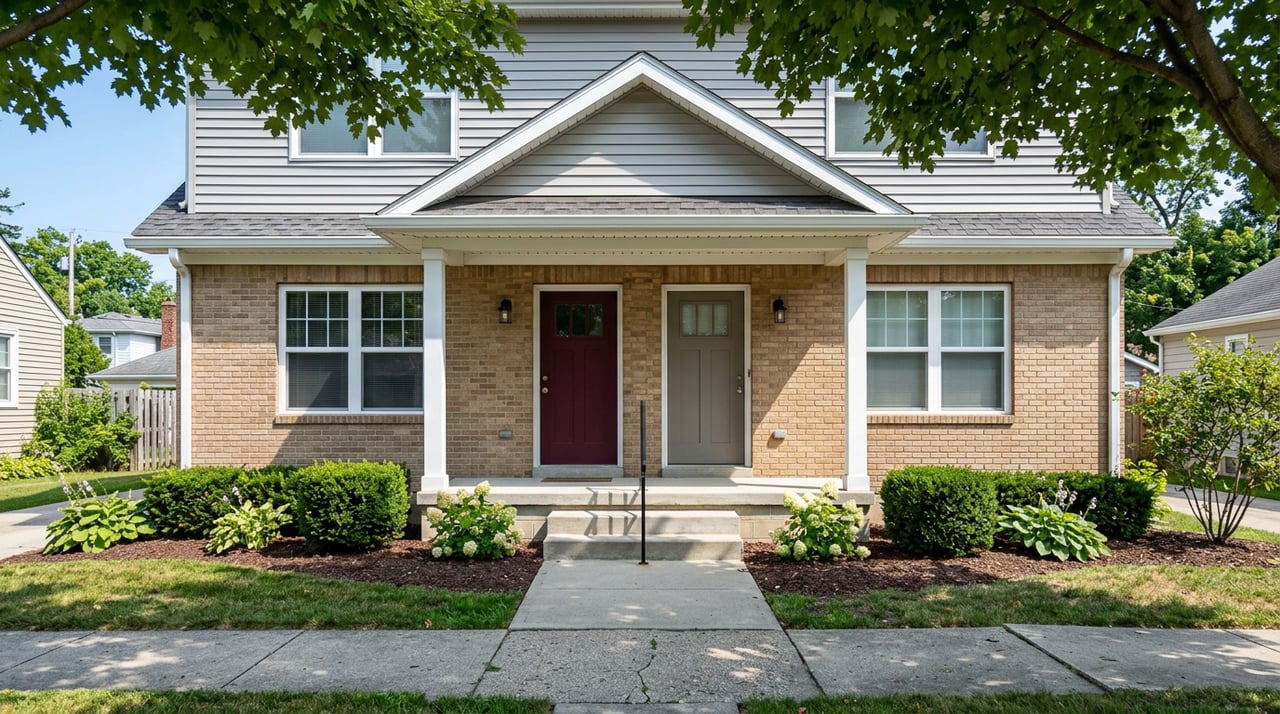
Prices vary by neighborhood, condition, and unit mix, but recent local activity suggests three common bands:
- Distressed or heavy value-add duplex: often under $80k to $100k.
- Typical value-add or average-condition duplex: about $100k to $225k.
- Turnkey or recently renovated duplex in stronger pockets: $200k to $300k and up.
Use recent sold comps for your target area instead of relying on city-wide averages. The spread can be wide from block to block depending on age, updates, and tenant profile.
What rents to expect
Citywide rent averages provide useful context, but always verify with neighborhood-level comps for small properties.
- RentCafe’s Rockford rent index shows average apartment rents near the low $1,000s, with a recent reading around $1,265 per month. See the latest on RentCafe’s Rockford rent index.
- Rentometer, which includes small multifamily and single-family rentals, shows medians roughly around $900 to $1,000 for 1-bedroom units and around $1,200 for 2-bedrooms, with higher numbers for newer or renovated spaces. Check current figures at Rentometer’s Rockford rent medians.
If you are evaluating a duplex with two 2-bedroom units, testing $1,100 to $1,350 per unit in your underwriting is a reasonable starting window. Adjust based on unit condition, included utilities, parking, and location.
Underwriting basics you can trust
Sound underwriting uses realistic assumptions for income and expenses, and it verifies every line during due diligence.
Key inputs to budget
- Vacancy allowance: 4 to 7 percent is a conservative baseline in Rockford. Use the higher end for older buildings or if the unit mix has limited appeal.
- Operating expense ratio: Plan for 40 to 50 percent of effective gross income for small multifamily. Many investors use the “50 percent rule” as a quick first screen, then build a line-item budget as they learn more about the property.
- Property management: Expect 6 to 10 percent of collected rents for third-party management. Owner-managing can reduce cash costs but requires time and systems.
- CapEx and reserves: Budget 5 to 10 percent of gross rent for reserves, with more if the property is older or has known deferred maintenance.
- Property taxes: Winnebago County’s effective tax burden often lands near 2 percent of market value on average. Actual parcel taxes vary by tax code and district rates, so always verify the current tax bill during due diligence.
Financing options, including house-hacking
If you plan to live in one unit, you may qualify for low-down owner-occupant financing on 1–4 unit properties. FHA allows as little as 3.5 percent down for qualified buyers, subject to loan limits and program rules. FHA’s self-sufficiency test applies to 3–4 unit purchases, while duplexes are more flexible. You can look up current county loan limits using HUD’s FHA mortgage limits tool. Conventional owner-occupant programs may also offer lower down payments on 2–4 unit homes. Always confirm today’s rate, fees, and guidelines with a lender.
Rockford duplex cash flow example
Here’s a simple, conservative example to show you how the numbers connect. This is for illustration only. Always verify real rents, expenses, and taxes for the actual property you’re considering.
- Property: 2-unit duplex
- Purchase price: $150,000
- Market rents: Two 2-bedroom units at $1,200 per month each
- Gross Scheduled Rent: $2,400 per month, or $28,800 per year
- Vacancy allowance: 6 percent
- Effective Gross Income (EGI): $28,800 × 94 percent = $27,072
- Operating expenses: Assume a 45 percent operating expense ratio on EGI → $27,072 × 0.45 = $12,182 per year
- Net Operating Income (NOI): $27,072 − $12,182 = $14,890
- Going-in cap rate: $14,890 ÷ $150,000 ≈ 9.9 percent
Debt and cash flow example (investor financing scenario):
- Loan-to-value: 75 percent (25 percent down)
- Loan amount: $112,500
- Sample interest rate: 6.0 percent fixed for 30 years (use a current quote for your underwriting)
- Approximate principal and interest: $674 per month, or $8,088 per year
- Pre-tax cash flow: $14,890 − $8,088 = $6,802 per year
- Cash-on-cash return: $6,802 ÷ $37,500 down payment ≈ 18.1 percent
Why this matters: In Rockford, relatively low purchase prices and workable rents can produce strong going-in yields when expenses are kept in line. That said, your actual result will depend on the exact building, its condition, taxes, and the loan you choose.
Quick sensitivity checks
Run these what-ifs before you write an offer:
- If rents are 10 percent lower, EGI falls and cap rate compresses. Does cash flow still meet your target?
- If vacancy rises by 3 points, what happens to NOI?
- If operating expenses are 5 points higher, do you still hit your return goal?
- If the interest rate is higher, how much cushion remains after debt service?
Local risks and practical checks
Buying small multifamily in Rockford can be rewarding, but it is still a hands-on investment. Plan for these items.
- Tax variability and reassessment: District tax rates differ by parcel. Treat county-wide effective rates as broad context only. Always pull the actual, most recent tax bill and review the tax code details during due diligence.
- Age and condition: Much of Rockford’s housing stock is older. Older systems and roofs can mean higher near-term capital costs. Get a thorough inspection and a contractor’s estimate for big-ticket items.
- Rents by submarket: Demand is not the same on every block. Stronger unit finishes, parking, and in-unit laundry can lift rent. Use comps from nearby small buildings, not just large apartment averages.
- Vacancy management: Budget 4 to 7 percent as a baseline and plan a leasing strategy that includes clear criteria, fair housing compliance, and timely turns.
- Management approach: If you plan to self-manage, build in a process for screening, maintenance, and collections. If you prefer hands-off ownership, price third-party management into your underwriting from the start.
Your next steps
Use this simple checklist to move from interest to action.
- Pull 3 to 5 recent sold comps for 2–4 unit buildings in your target neighborhood. Focus on the last 6 to 12 months.
- Confirm current rents with nearby small-building comps and recent listings. Pair city-level data from RentCafe and Rentometer with on-the-ground checks.
- Verify the seller’s rent roll and the last 12 to 24 months of operating expenses. Request utility histories when possible.
- Pull the current property tax bill and review the parcel’s tax code rates. Do not rely only on averages.
- Order a full inspection and get contractor quotes for any major repairs. Increase reserves for older properties.
- Get pre-approved and review financing structures. If you plan to occupy one unit, ask about FHA or low-down conventional options and any lender overlays.
- Decide how you will manage the property. If you will use a manager, interview options now and include their fees in the pro forma.
If you want a clear read on today’s Rockford small-multifamily listings, help pulling recent comps, or a second set of eyes on your numbers, reach out to Kevin Fisher. You will get local guidance, straight talk on value, and help lining up the steps from offer through closing.
FAQs
What cap rate should I expect in Rockford?
- Recent benchmarks show multifamily cap rates in the mid-to-high single digits. Individual deals vary with price, rents, taxes, and condition. Smaller 2–4 unit properties often price at higher cap rates than large institutional buildings.
How much should I budget for expenses on a duplex?
- A 40 to 50 percent operating expense ratio on effective gross income is a conservative starting point. Include property taxes, insurance, repairs, utilities paid by the owner, management, leasing costs, and a capex reserve.
Can I buy a Rockford duplex with a low down payment?
- Yes, if you will live in one unit. FHA financing can allow as little as 3.5 percent down for qualified buyers on 1–4 unit homes, subject to loan limits and rules. Check your county limits on HUD’s FHA mortgage limits tool.
What vacancy rate is realistic for Rockford rentals?
- Underwrite 4 to 7 percent as a baseline. Use the higher end for older buildings or if the location has more tenant turnover. Always validate with local comps and your management plan.
How do Rockford rents compare with home prices for investors?
- Average rents sit around the low $1,000s per unit, while entry prices for small buildings are often in the low-to-mid $100k to low $200k range. That relationship can support cash flow when expenses and taxes are budgeted carefully.